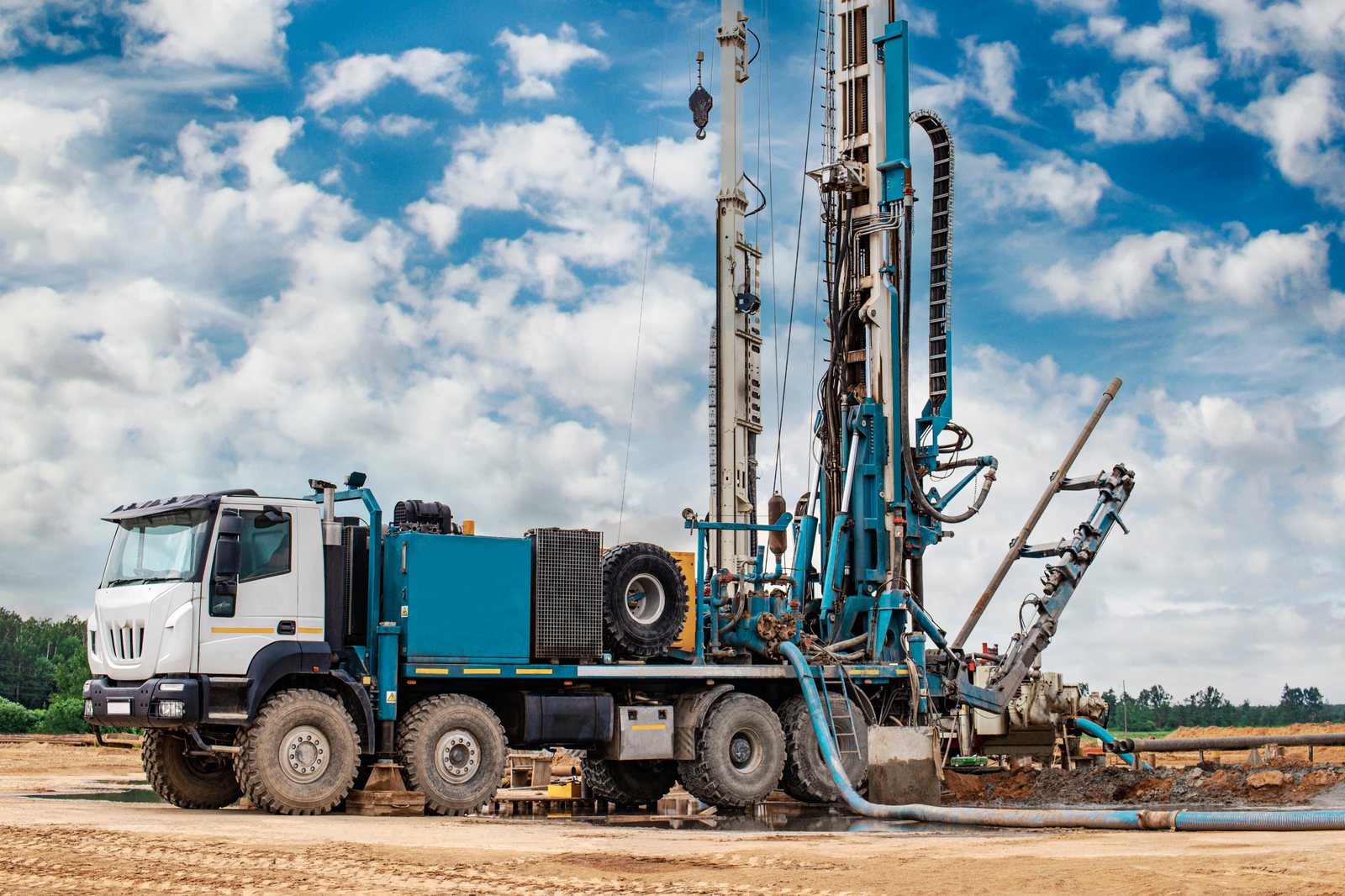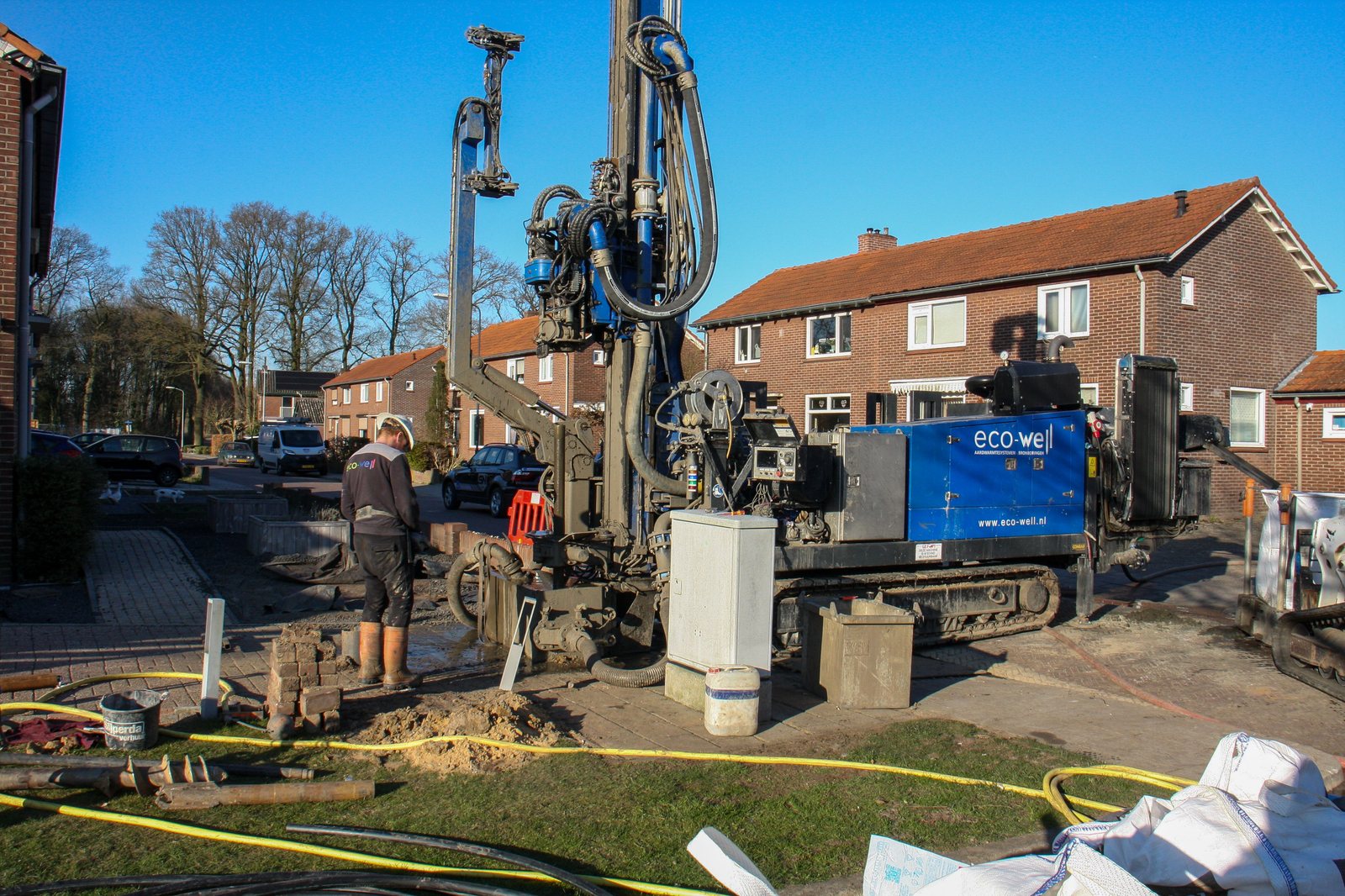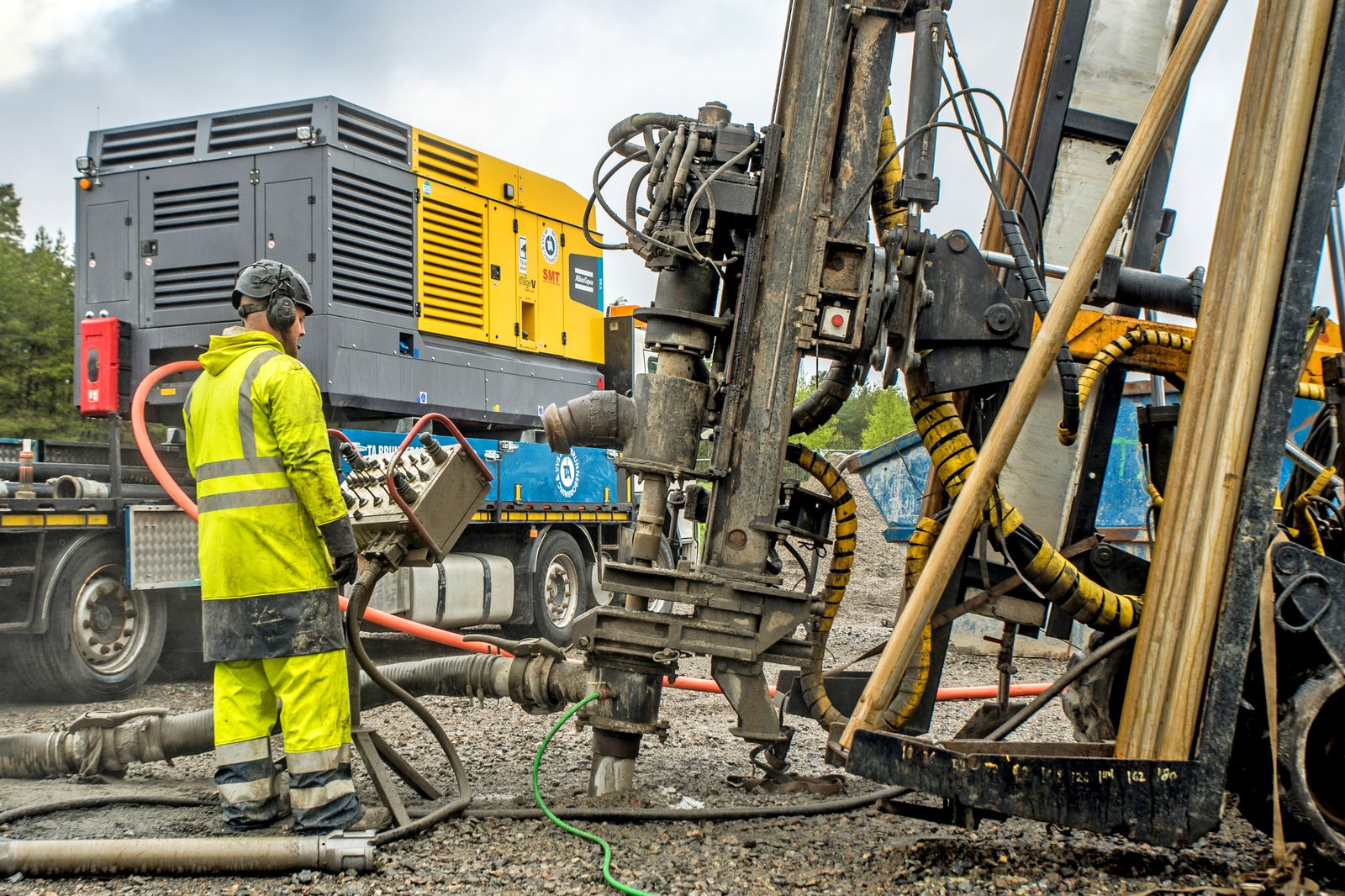
Footage of this machine working on site is available on request. Ask our technical desk and we will send it by WhatsApp.
16–25 bar PACE regulation, 25.4–22.8 m³/min free air delivery — the entry DrillAir unit for 90–140 mm DTH water wells, exploration and shallow blast holes.
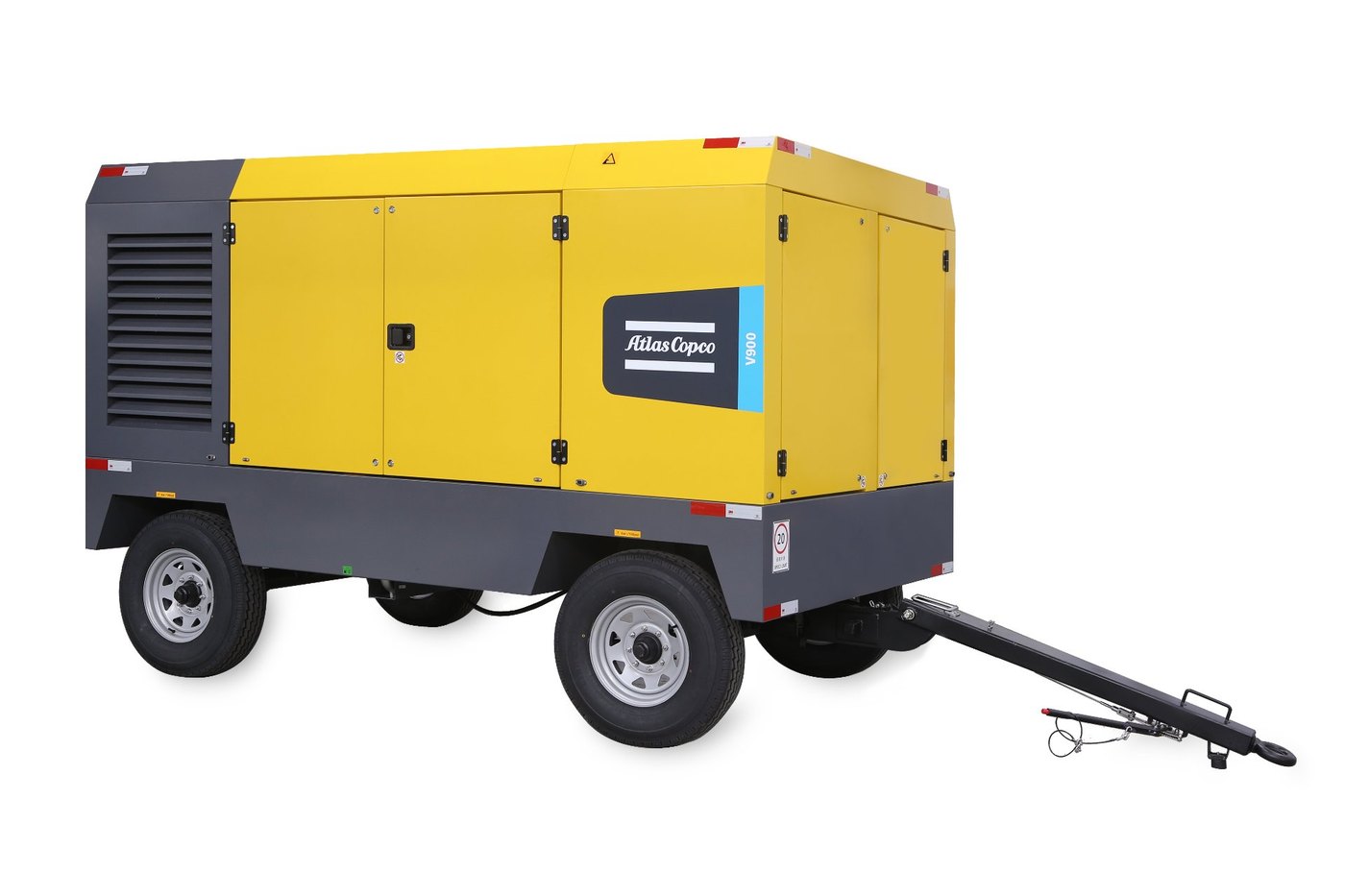
The Atlas Copco DrillAir V900 is a wagon-mounted drilling compressor rated 16–25 bar and 25.4–22.8 m³/min, driven by a Cummins QSL8.9 engine at 264 kW. PACE regulation holds a steady air volume across the pressure band, so a DTH hammer keeps its penetration rate when the pressure is turned up. It suits 90–140 mm hammers in water wells, exploration holes and shallow blast holes; deeper holes or heavy water inflow call for the V1200 or X1300.
| Full technical specification | |
|---|---|
| Air end | |
| Free air delivery | 25.4 – 22.8 m³/min (897–805 cfm) |
| Working pressure | 16 – 25 bar (232–363 psi) |
| Pressure regulation | PACE — full air volume across the pressure band |
| Engine & drive | |
| Engine | Cummins QSL8.9 |
| Rated power | 264 kW |
| Weight & dimensions | |
| Weight, wagon — dry | 4,079 kg |
| Weight, wagon — wet | 4,583 kg |
| Dimensions, wagon (L × W × H) | 4,252 × 2,100 × 2,500 mm |
| Fuel tank capacity | 420 L |
| Max ambient temperature at sea level | 50 °C |
| Noise level (ISO 2125) | 80 dB(A) |
| Mounting | Wagon / towable, or skid-mounted |
| Air outlet | 1 × G2 and 1 × G¾ |
Complete data for pre-selection. Final configuration is confirmed in the proforma invoice and on the machine nameplate.
PACE regulation keeps the air volume close to its maximum as pressure rises, so the hammer is not starved when the setting is increased for a deeper hole.
| Working pressure | Free air delivery | Typical duty |
|---|---|---|
| 16 bar (232 psi) | 25.4 m³/min (897 cfm) | Shallow water wells, 90–115 mm hammers, high penetration rate |
| 20 bar (290 psi) | 24.0 m³/min (848 cfm) | General water well and exploration holes, 110–130 mm |
| 25 bar (363 psi) | 22.8 m³/min (805 cfm) | Deeper holes and harder formations, 130–140 mm hammers |
Test conditions for the figures above: free air delivery is stated at the compressor outlet, measured to ISO 1217 at reference inlet conditions of 20 °C ambient, 1 bar absolute inlet pressure and 60 % relative humidity. Site altitude, ambient temperature above 25 °C and long or undersized hose runs all reduce the air actually reaching the hammer. We recalculate the delivered volume for your site before quoting. Figures are model ratings, not a guarantee for a specific site without that calculation.
Six inputs decide whether this machine fits. Send them and we return a pressure and air-volume calculation for the site, or tell you that a larger model is the honest answer.
| Input | Why it changes the answer |
|---|---|
| Hammer model and shank | Each hammer has a rated air consumption at a stated pressure; the compressor must cover it at the working pressure, not at its maximum. |
| Hole diameter | Larger diameter means a larger hammer and more air per metre — the main reason a 25 bar unit runs out of volume. |
| Planned hole depth | Depth adds back pressure from the annulus and the water column, so the effective pressure at the hammer drops as the hole deepens. |
| Rock formation | Hard abrasive rock needs higher pressure to keep penetration; soft overburden does not, and running a lower pressure saves fuel. |
| Site altitude and ambient temperature | Air density falls with altitude and hot ambient air derates the engine, both reducing delivered volume below the rated figure. |
| Hose and drill pipe layout | Long runs and small bore add pressure loss between the compressor and the hammer; the loss must be subtracted from the rated pressure. |
Typical duty in water well drilling, quarry blasting, foundation piling and mining projects.
Certification documents — CE and ISO — are available on request for the specific model and configuration quoted.
A drilling compressor is a heavy, awkward load. These are the points buyers check before the balance is paid — we would rather agree them in the offer than argue about them at the port.
Wagon-mounted on its own chassis, shipped as one unit. Weight is 4,079 kg dry, so the unit normally travels as a break-bulk or flat-rack load rather than inside a standard container. We confirm the load plan, lifting points and lashing arrangement for your port before booking.
Operator manual and parts catalogue, the service items listed above, and the factory pressure and flow test report. Tooling, hoses and spare hammer parts are quoted separately so you can see exactly what is in the package and what is not.
Nameplate photographs, hour-meter reading, a video walk-around and the test report are sent with the shipping documents. If you or your engineer want to inspect in Chengdu before the unit is loaded, tell us at the quotation stage and we schedule it.
Check the nameplate against the proforma invoice, the hour meter, and for transit damage on the chassis, canopy and hose reel before signing the delivery receipt. Photograph anything you find and send it the same day — that is what the carrier's claim window runs on.
Commercial invoice, packing list, bill of lading, certificate of origin where applicable, and the operation and maintenance manual. Certification documents for the specific configuration are provided on request with the quotation.
Pressure setting, controller parameters and cold-weather package checks are walked through remotely at first start-up. On-site commissioning can be quoted as a separate line if your project needs it.
Get the full specification as a print-ready PDF — useful for internal approval and tender documents.
Thank you — your download is ready.
Open PDF specificationYes. Pressure settings within the model's regulation range are fixed at the factory or adjusted by the electronic controller during commissioning. Tell us the required pressure and the tool it feeds, and we will match the setting.
Machines supplied to this market are configured for high ambient operation, with derating limits applied per the manufacturer data sheet. For sites above 45 °C we confirm the specific configuration and cooling package in the proforma invoice.
Standard models are typically available from stock or with a short production lead time. Because freight and customs clearance vary by destination port, we quote the complete delivery schedule line by line in the offer.
The V900 is the entry unit in the DrillAir range: 16–25 bar and 25.4–22.8 m³/min. The V1200 and X1300 deliver more air at the same or higher pressure, which is what a 150 mm hammer or a hole beyond roughly 150 m needs. If your hole diameter and depth sit inside the V900 band, the smaller unit burns less fuel and costs less to move; if they sit outside it, no amount of pressure adjustment will make up the missing volume.
They are model ratings measured to ISO 1217 at 20 °C ambient, 1 bar absolute inlet and 60 % relative humidity. Altitude, hot ambient air, long hose runs and water inflow all reduce what reaches the hammer. Send us the altitude, the hose layout and the hammer model and we recalculate the delivered volume for your site before the offer is issued.
The more we know about your site, the more accurate the offer — we quote the machine, tooling, freight and commissioning as one itemised package.
Machine, tooling, freight and commissioning quoted as one itemised offer.
V900: 16–25 bar, 22.8–25.4 m³/min. Below: machines in service, and the checks we hand over before a deposit is paid.


We return a pressure and air-volume calculation for your site — not a brochure page.